The Isle of Wight used car market is genuinely good — but it's smaller than any mainland town. If you're looking for something specific (a particular model, specification, or rare variant), the mainland will sometimes have better options or better prices. Here's how to manage the logistics.
When Mainland Buying Makes Sense
Buying from the mainland is worth considering when:
- The car you want is rarely listed on the island (classic cars, unusual specifications, specific colours)
- The mainland price is significantly lower and the ferry cost is more than offset by the saving
- You're looking for a very recent (1–2 year old) car and supply on the island is limited
For common cars (Ford Fiesta, Vauxhall Corsa, Toyota Yaris), the island market is usually sufficient. For anything less common, the mainland dramatically increases your options.
Ferry Options and Costs
| Route | Operator | Journey | Typical Car Cost (2026) |
|---|---|---|---|
| Fishbourne → Portsmouth | Wightlink | ~45 mins | £50–£100 one way |
| Yarmouth → Lymington | Wightlink | ~35 mins | £50–£85 one way |
| East Cowes → Southampton | Red Funnel | ~65 mins | £55–£110 one way |
Prices vary significantly by time of day, day of week, and how far in advance you book. Travelling at peak times (Friday evening, bank holiday weekends) costs considerably more.
Budget for one return trip minimum — foot passenger to view, car ferry for collection. For a £5,000 car, a £150 return trip is 3% of the purchase price — worth it if you find the right car.
Step-by-Step: Buying from the Mainland
Step 1: Shortlist and Research
Before travelling, do everything you can remotely:
- Check the MOT history at gov.uk/check-mot-history
- Run an HPI check (costs ~£15–£20)
- Review all photos carefully and ask the seller for any additional shots you need
- Video call the seller if possible — it's a good way to see the car's condition and assess the seller's credibility
Step 2: First Visit as a Foot Passenger
Unless you're extremely confident after remote research, travel as a foot passenger on the first visit. This costs far less (around £15–£25 return foot passenger) and lets you inspect and test drive the car before committing to the car ferry booking.
If the car is right, arrange to return the following day or book the car ferry immediately for the return journey.
Step 3: Sort Insurance Before You Leave
You must have valid insurance before driving the car away. Options:
- Add to existing policy: Call your insurer before travelling. Adding a second car for a day or more while you arrange a main policy is often possible
- Temporary insurance: Several apps (Dayinsure, Veygo, Cuvva) offer hourly or daily cover — can be arranged from your phone before leaving the seller
Never drive an uninsured car, even for the 20 minutes to the ferry terminal. If you're stopped, the penalties are severe.
Step 4: Tax the Car Before Driving
Road tax (VED) does not transfer when a car is sold. The buyer must tax the car in their name before driving it. Do this on gov.uk/vehicle-tax using the V5C or new keeper supplement. Takes 10 minutes on a phone.
Step 5: Book the Ferry
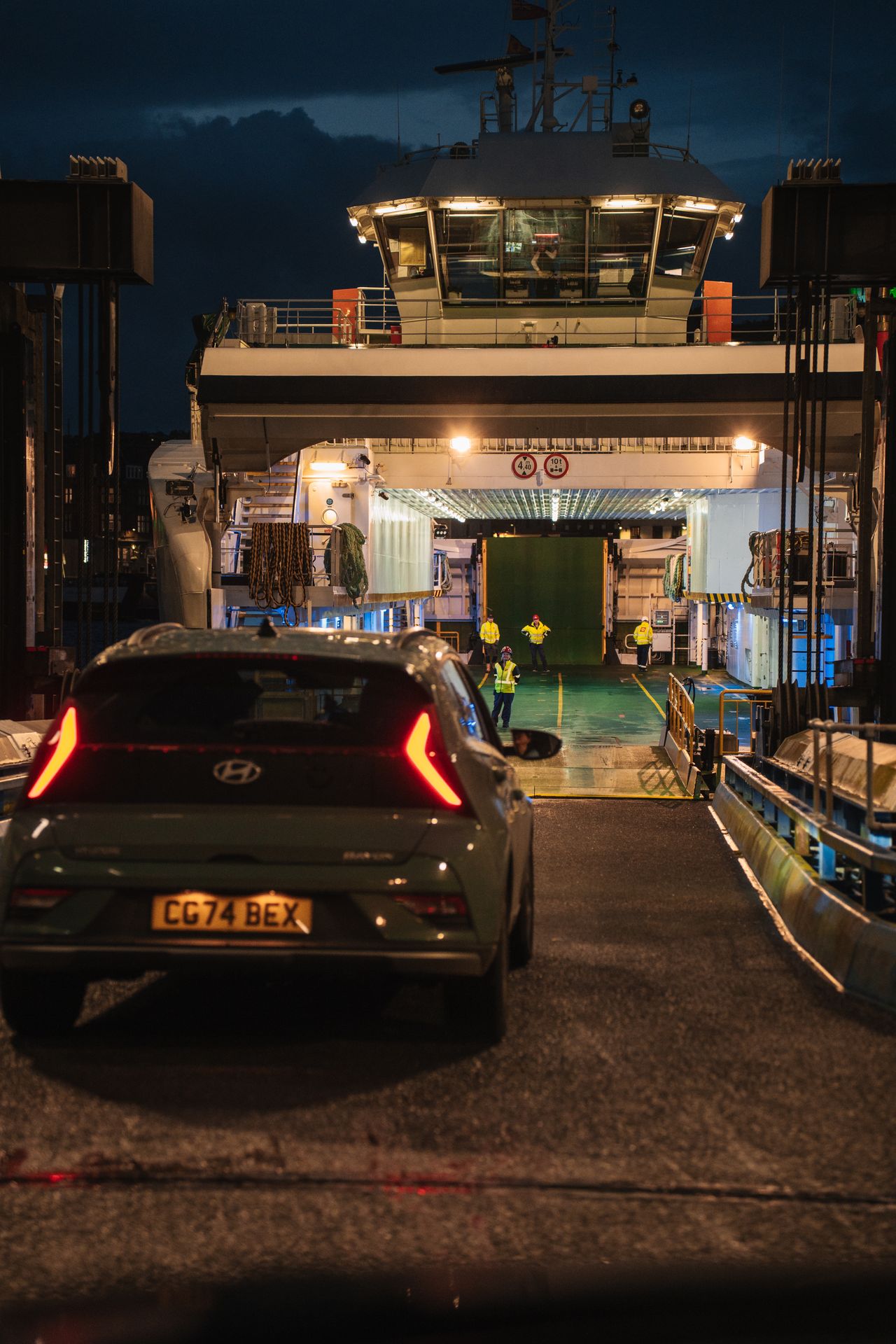
Book online in advance for the best fares. You'll need the vehicle registration number, length (most standard cars are under 4.5m), and your travel time.
Allow extra time at the terminal — ferry check-in typically opens 45 minutes before departure and closes 20–30 minutes before.
Height and Length Restrictions
Most standard cars have no issue on any IoW ferry route. Relevant if you're buying:
- High-roof vans: Check the Wightlink and Red Funnel height restrictions (varies by route and vessel)
- Long vehicles: Over 5m may incur length surcharges
Check the specific ferry operator's website if you're buying anything unusual in size.
Reducing Costs
| Strategy | Saving |
|---|---|
| Travel off-peak (midweek, daytime) | Up to 40% cheaper than peak fares |
| Book at least 7 days in advance | Avoids last-minute pricing |
| Travel as foot passenger on viewing trip | Saves the car fare entirely |
| Use Yarmouth–Lymington for Southern Hampshire cars | Often cheaper than Portsmouth routes |
Is It Worth It?
A realistic calculation:
- Ferry return for viewing (foot): £25
- Ferry for car (one way): £65
- HPI check: £20
- Total additional cost: ~£110
If the mainland car is more than £110 cheaper than equivalent island options — and in similar condition — it's worth the trip. If the saving is marginal, buying locally avoids the logistics entirely.
Frequently Asked Questions
How much does the ferry cost when collecting a car from the mainland? A car ferry crossing typically costs £50–£110 one way depending on route, time of day, and how far in advance you book. Wightlink Fishbourne–Portsmouth is the most-used route (around 45 minutes, £50–£100 one way). Wightlink Yarmouth–Lymington is quicker (35 minutes) and often marginally cheaper. Red Funnel East Cowes–Southampton is useful for Hampshire or London-area purchases. Budget around £65–80 one way for a standard car at off-peak times when booked a week ahead.
Should I visit the car as a foot passenger first? Yes — strongly recommended. A foot passenger return ticket costs around £20–30, versus £100–200 for a car return. Travel by foot to inspect and test drive the car before committing to the car ferry booking. If the car is right, arrange to return the following day or book the car ferry for the same day at a different time. The foot passenger trip eliminates the risk of spending £100 on the car ferry to see a car in poor condition or misrepresented by the seller.
What paperwork do I need before driving a newly purchased car? Two things before you drive away: insurance and road tax. Insurance must be arranged before driving — use a temporary insurance app (Dayinsure, Veygo, Cuvva) if you haven't added the car to an existing policy yet. Road tax (VED) must be in your name from the moment you take ownership — tax the car on gov.uk using the V5C or new keeper supplement. Both take under 15 minutes by phone. Also run an HPI check before purchase (around £15–20) to confirm no outstanding finance or theft records.
How do I book the ferry with a newly purchased car? Book online with the ferry operator (Wightlink or Red Funnel) using the car's registration number, overall length, and your desired crossing time. Most standard cars are under 4.5 metres — no complications. Book in advance for the best fares and to guarantee your preferred time. Arrive at the terminal at least 30 minutes before departure — check-in closes typically 20 minutes before sailing. Allow extra time if collecting from a private seller who might run slightly late.
Is it worth buying from the mainland rather than locally on the IoW? For common cars (Fiesta, Corsa, Golf, Qashqai), the local island market is usually sufficient — browse WightWheels first. For specific models, rare specifications, or very recent cars where island supply is limited, mainland buying makes sense. Add up realistic additional costs: foot passenger return (£25) + car ferry one way (£65) + HPI check (£20) = roughly £110. If the mainland car is more than that cheaper than equivalent island options in comparable condition, the trip pays for itself. Any saving beyond £110 is genuine.
Browse local Isle of Wight listings first →
Related: IoW resident ferry discount guide · Should I bring my car to IoW? · Car ownership costs IoW