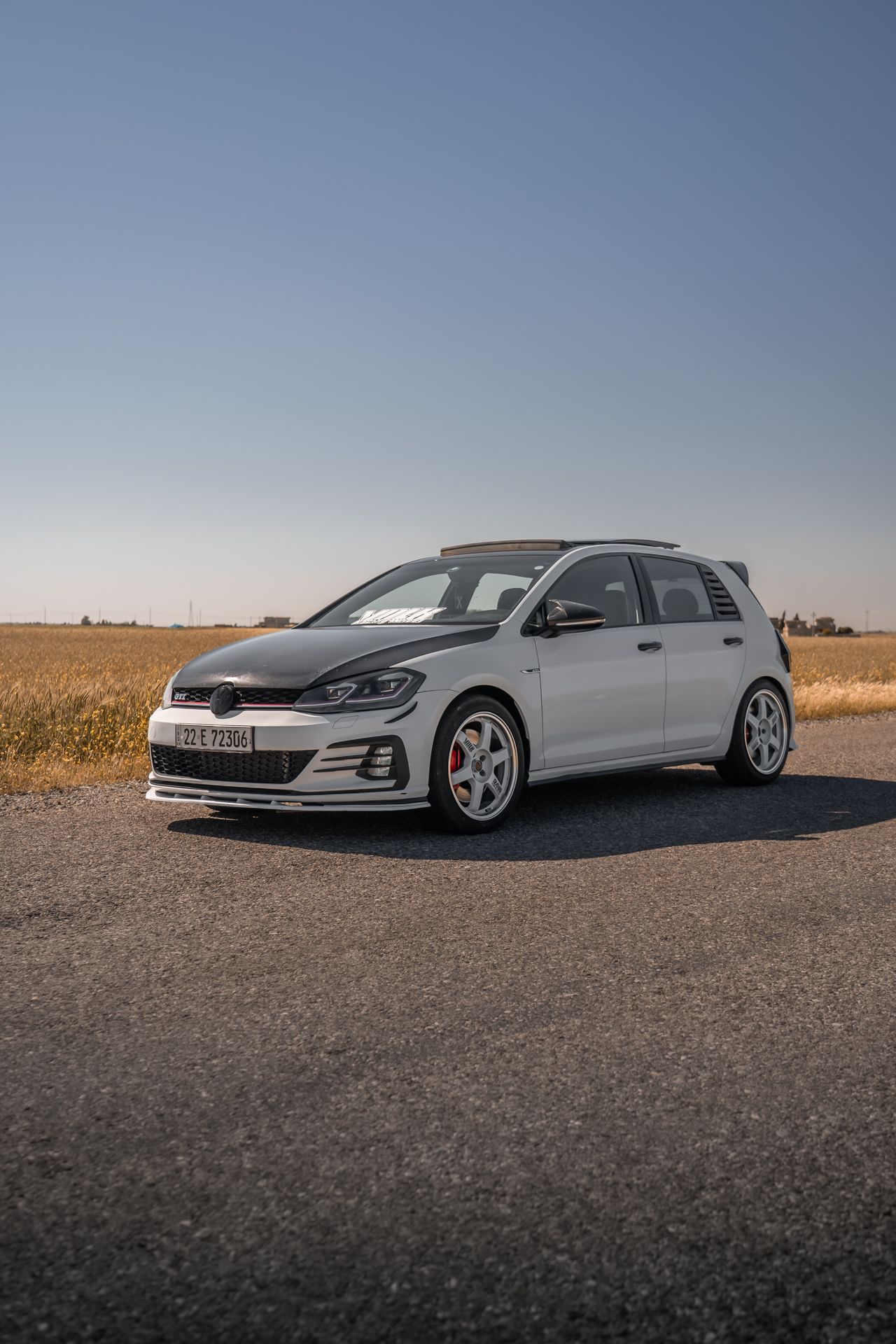
The Volkswagen Golf is the car that sits just above the Fiesta and Corsa in the used car hierarchy — a step up in quality, refinement, and perceived status, without jumping into premium territory. On the Isle of Wight, a clean Golf is consistently one of the most sought-after used cars, and the island's lower annual mileages mean good examples come up regularly.
Which Generation to Buy
Mk6 Golf (2008–2013): The entry point for buyers on a tighter budget. Available from around £3,500 for a high-mileage example up to £8,000 for a clean, lower-mileage car. The 1.4 TSI and 1.6 TDI are the most common engines. Build quality is excellent — these age well.
Mk7 Golf (2012–2019): The sweet spot. Widely regarded as one of the best cars of its generation. More fuel-efficient engines, better interior, stronger resale value. A 2014–2016 example with around 60,000–80,000 miles is the target for most buyers. Budget from £6,000–£12,000 depending on spec and mileage.
Mk8 Golf (2019–present): The newest generation, available from around £14,000 used. Controversial touchscreen interface replaces physical controls — worth testing before committing if you find physical buttons important.
Which Engine?
1.0 TSI (90 or 115bhp, Mk7/Mk8): The three-cylinder turbocharged petrol. More capable than its size suggests. Economical and refined for island driving. Good for buyers who mainly do shorter trips.
1.4 TSI (125bhp, Mk6/Mk7): The traditional choice. A well-proven turbocharged four-cylinder with a good balance of economy and performance. Check for carbon build-up on the inlet valves on higher-mileage examples.
1.6 TDI (105bhp, Mk6/Mk7): The diesel option for high-mileage users. Excellent fuel economy on longer runs and ferry commutes. Avoid if you mainly do short island trips — the DPF will suffer.
2.0 GTI / R: Performance variants. Available from around £8,000 (Mk6 GTI) to £20,000+ for recent R models. Higher insurance, tyres, and servicing costs. Not essential for island roads, but genuinely enjoyable on the Military Road.
Known Issues to Check
DSG gearbox (dual-clutch automatic): Common on Mk6 and Mk7. Some early units developed judder at low speeds. Check for smooth, seamless gearchanges. A hesitation or lurch below 10mph is a warning sign.
Water pump and timing chain (1.4 TSI): The 1.4 TSI in Mk6 can develop water pump and timing chain tensioner issues on higher-mileage cars. Ask for service history showing these have been addressed.
Rear beam rust (Mk6): The rear torsion beam on the Mk6 can rust in joints and mounts. On a coastal island car, check this carefully.
Carbon build-up (direct injection engines): Any direct injection engine (TSI, TDI) can build up carbon deposits on inlet valves over time. A recent walnut-blast clean in the service history is a good sign.
IoW Buying Tips
A Golf attracts buyers from across the island — a well-priced example won't sit long. If you find a clean Mk7 with documented service history, move quickly.
Check for island rust, particularly on older examples: sills, wheel arches, and underneath around the rear beam.
Run the MOT history at gov.uk/check-mot-history and consider an HPI check — Golfs are frequently used as finance vehicles and it's worth confirming the car is clear.
Budget Guide
| Budget | What to Expect |
|---|---|
| £3,000–£5,000 | Mk6, 2009–2012, 80,000–120,000 miles |
| £5,000–£8,000 | Mk6 late or early Mk7, 60,000–90,000 miles |
| £8,000–£12,000 | Mk7, 2014–2017, 40,000–70,000 miles |
| £12,000–£18,000 | Mk7 late or early Mk8, lower mileage |
Frequently Asked Questions
What is the best generation VW Golf to buy on the Isle of Wight? The Mk7 Golf (2012–2019) is the standout choice. It combines excellent build quality, efficient modern engines, and strong reliability — widely regarded as one of the best cars of its generation. A 2014–2016 example with documented service history in the 60,000–80,000 mile range represents the sweet spot. The Mk6 is a solid budget alternative; the Mk8 is worth considering if you can stretch to £14,000+ and don't mind the touchscreen-dominated interior.
Which VW Golf engine is best for IoW driving? The 1.0 TSI (Mk7/Mk8) is the best match for island conditions — economical, surprisingly capable, and no DPF concerns. The 1.4 TSI in Mk6/Mk7 is also good but check for carbon build-up on higher-mileage examples. Avoid the TDI diesel unless you regularly commute to the mainland via ferry — the island's short trips are hard on diesel particulate filters. The GTI and R are genuinely entertaining on the Military Road and island lanes, but bring higher insurance and running costs.
What should I check when buying a VW Golf on the Isle of Wight? Rust on the rear torsion beam mounts on Mk6 examples — salt air exposure makes this a particular concern on older island cars. Check DSG gearbox behaviour at low speeds: smooth changes are normal, any judder or hesitation is a warning sign. On 1.4 TSI engines, look for service records showing water pump and timing chain tensioner attention on higher-mileage examples. Run an HPI check — Golfs are frequently used as finance vehicles, and checking for outstanding finance is worthwhile.
How much does a VW Golf cost on the Isle of Wight? A Mk6 Golf (2009–2012) with 80,000–120,000 miles typically costs £3,000–£5,000. A clean Mk7 in the 40,000–70,000 mile range is £8,000–£12,000. Late Mk7 and early Mk8 examples start around £12,000. Island pricing broadly tracks mainland values — the Golf carries a higher perceived value than most cars at its price point, which sellers are aware of.
Is the VW Golf DSG gearbox reliable for island driving? The DSG (dual-clutch automatic) is generally reliable but earlier Mk6 units developed judder at low speeds — particularly noticeable in the stop-start conditions common on island roads. Later software updates addressed most of the early issues. If you're looking at a DSG Golf, test it thoroughly in slow traffic: smooth, seamless changes are what to expect. Any hesitation or lurch below 10mph is a warning sign worth investigating before buying.
Browse Volkswagen Golfs for sale on the Isle of Wight →
Related: Ford Focus guide · Skoda Octavia guide · HPI checks explained