The Isle of Wight is 23 miles wide and 13 miles long. The longest single journey you'll make on the island — Yarmouth to Bembridge — is around 22 miles. For context, even a 2013 Nissan Leaf with a degraded battery typically manages 60–70 miles on a charge. Range anxiety, the most common objection to electric car ownership, is almost entirely irrelevant here.
The island is, in many ways, an ideal EV environment: short trips, low speeds, and a growing network of public charge points backed by national schemes.
Why an EV Makes Sense on the IoW
Short distances: The average island resident drives far less than the UK average of 7,400 miles per year. Many do 3,000–5,000 miles annually. An EV with 150 miles of real-world range can go days or weeks between charges.
Lower running costs: Electricity costs significantly less per mile than petrol or diesel. Charge at home overnight on an Economy 7 or off-peak tariff and the cost per mile is around 3–5p — compared to 12–18p for petrol.
No ferry fuel surcharge concern: If you're mostly staying on the island, you don't need to worry about running low mid-crossing. (The ferries don't charge cars en route.)
Quieter driving experience: Low-speed island driving suits the smooth, instant torque of electric motors.
What to Look For When Buying a Used EV
Battery health: The most important factor in any used EV purchase. Battery degradation is normal — a 2014 Nissan Leaf will have lost capacity over time. Ask for a battery health report (a garage or the dealership can run one), or use an OBD2 reader with the EV-specific app for the model.
A battery showing 75% or more of its original capacity is generally acceptable for island use, given the short distances involved.
Charging cable included: Check the car comes with a Type 2 charging cable (for public chargepoints) and a 3-pin domestic cable. Replacement cables cost £150–£300.
Service history: EVs have fewer moving parts than petrol cars but still need servicing — brakes, tyres, coolant, and software updates. Look for annual check records.
Tyre condition: EVs are heavier than equivalent petrol cars, which accelerates tyre wear. Check tread depth and look at the inner edge for unusual wear patterns.
Best Used EVs for Isle of Wight Buyers
Nissan Leaf (2011–present) — from ~£4,000
The most common used EV in the UK. The 24kWh battery in early models gives around 60–80 miles in real-world use — sufficient for island driving. The 30kWh version (2016–2017) gives around 100 miles. The second-generation Leaf (2018+) with 40kWh or 62kWh battery is a significant step up in range and refinement.
Check: Battery health state via LeafSpy app and OBD dongle. Aim for 75%+ SoH on first-gen cars.
Full Nissan Leaf buyer's guide for the IoW →
Renault Zoe (2013–present) — from ~£6,000
A more refined alternative to the Leaf. The 22kWh battery in early models (around 80 miles real-world); later 41kWh models (around 150 miles); the 2019+ ZE 50 gives 190–240 miles. Note: some early Zoes have a battery rental scheme rather than owned battery — clarify before buying.
Check: Whether the battery is owned or rented. The 2019+ ZE 50 models are all battery-owned and support CCS rapid charging.
Full Renault Zoe buyer's guide for the IoW →
BMW i3 (2013–2018) — from ~£8,000
The premium option. Carbon fibre body, distinctive styling, and a refined driving experience. The range-extender (REX) version adds a small petrol generator — useful for mainland trips but rarely needed on the island. Around 80–100 miles on the standard battery.
Check: Tyre condition — the i3 uses unusual narrow tyres that are expensive to replace.
Volkswagen e-Golf (2014–2019) — from ~£9,000
Familiar Golf driving experience with electric power. The 35.8kWh battery gives around 125 miles in real-world use. Charges on a standard Type 2 socket. Lower profile than the Leaf, which means less supply — but worth waiting for if you want a conventional family hatchback experience.
Volkswagen ID.3 (2020–present) — from ~£18,000
VW's purpose-built electric hatchback on the MEB platform. The 58kWh battery gives around 210–230 miles of real-world range — far more than any IoW journey requires. Better interior quality than the older e-Golf and up to 100kW DC rapid charging. For buyers who want a newer, better-specified EV, the ID.3 is an excellent island choice.
Check: Software version (early cars needed OTA updates for infotainment stability) and battery state of health via VW's dealer diagnostics.
Full VW ID.3 buyer's guide for the IoW →
Kia e-Niro / Hyundai Kona Electric (2018–2021) — from ~£14,000
The step up to serious range. Both offer 200+ miles on a charge. Useful if you take the car to the mainland regularly via ferry. Strong reliability record and Kia's seven-year warranty may still apply on lower-mileage examples.
Charging on the Isle of Wight
The island has a network of public charge points at Newport, Ryde, Cowes, Shanklin, and other towns. For a detailed guide to where they are and how to access them, see our electric car charging guide for the Isle of Wight.
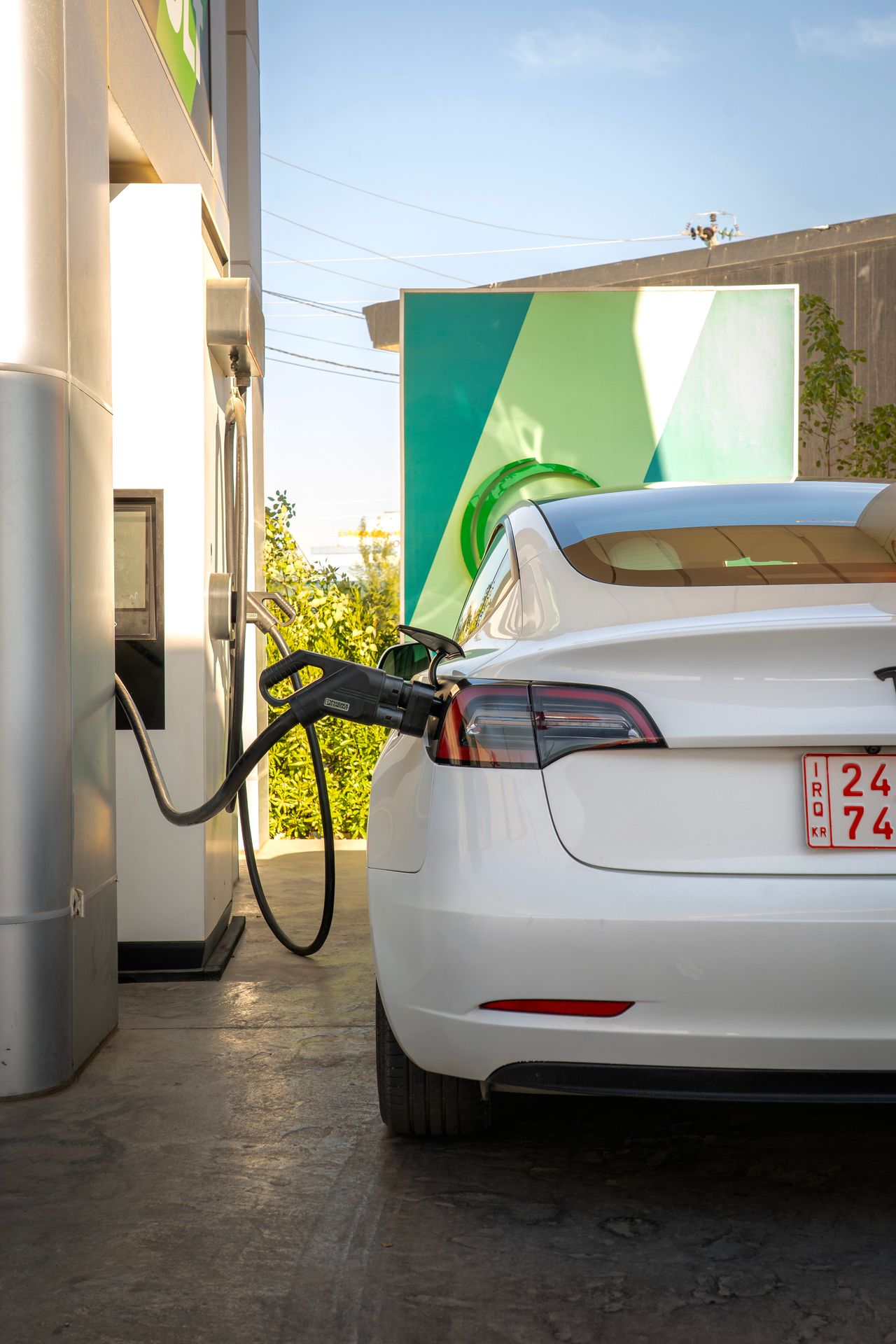
For most island residents, home charging is the primary method. A standard 3-pin socket will charge a Nissan Leaf overnight. A dedicated home wallbox (7kW) charges any EV in 4–8 hours.
Selling an Electric Car on the Island?
EV supply on the island is limited, which means buyers are willing to travel for a good example. List free on WightWheels and include the battery health percentage, all cables included, and any home charging equipment you're selling with it.
Frequently Asked Questions
Why is the Isle of Wight a particularly good place to own an electric car? Three reasons combine uniquely here. First, distance: the island is 23 miles long. The longest possible journey — Yarmouth to Bembridge — is around 22 miles. Even a 2013 Nissan Leaf with a significantly degraded battery handles any IoW daily routine with range to spare. Second, speed: IoW roads are mostly 30–40mph in settlements and 60mph national limit on open roads — exactly the speeds where EVs are most efficient. Third, lifestyle fit: most island residents have off-street parking for home charging, modest annual mileage (3,000–5,000 miles), and don't need the car for long daily mainland commutes.
What is the best used electric car to buy on the Isle of Wight? Depends on budget. Under £7,000: a first-gen Nissan Leaf (24kWh or 30kWh) is the entry point — 60–80 miles real range, more than sufficient for island use, and dirt cheap to run. £8,000–£14,000: second-gen Nissan Leaf (40kWh, 150–180 miles real range) or ZE 50 Renault Zoe (190–240 miles) are both excellent. £14,000–£22,000: the Vauxhall Mokka-e, VW ID.3 Pro (58kWh), or Peugeot e-2008 offer a more premium experience with longer range than any IoW journey requires. The Kia e-Niro and Hyundai Kona Electric are strong choices if you also want to handle regular mainland trips comfortably.
How do I check battery health on a used electric car? Approach varies by model. For the Nissan Leaf: use the Leaf Spy app with a cheap OBD-II Bluetooth adapter — it reads State of Health (SoH) percentage directly. Target 75%+ SoH for first gen, 85%+ for second gen. For the Renault Zoe: a Renault dealer or EV specialist can run an official battery health check; also check the dashboard estimated range after a full charge. For the VW ID.3: VW dealer diagnostics pull battery health directly. For most EVs: ask the seller to charge fully before viewing and check the displayed range estimate — compare to what the car showed when new.
Where can I charge an electric car on the Isle of Wight? Home charging is the primary option for most island residents — a 7kW wallbox charger (typical home installation cost £700–£900) fully charges most EVs overnight. For public charging, the island has a network across Newport, Ryde, Cowes, Shanklin, and the Wightlink ferry terminals. IoW Council car parks have charge points. The Zap-Map app shows real-time charger locations and availability across the island. The charging infrastructure is growing but is less dense than major mainland cities — home charging capability is effectively essential for comfortable EV ownership on the island.
What is the cheapest electric car suitable for island driving? A first-gen Nissan Leaf (2011–2014, 24kWh) can be found for £3,000–£6,000 and provides 60–80 miles of real-world range when healthy — sufficient for virtually any IoW journey. Running costs are among the lowest of any car available: roughly £60–90/year in electricity for 5,000 miles at Economy 7 rates. The 12V auxiliary battery will need replacing (around £100–120), and it's worth running a Leaf Spy SoH check before buying. For the cheapest practical island EV, the first-gen Leaf at 75%+ SoH is hard to match.
Browse electric cars for sale on the Isle of Wight →
Related: EV charging on the Isle of Wight · Kia Niro guide · Nissan Leaf guide