Buying a used car privately means doing your own due diligence. There's no dealer warranty, no Consumer Rights Act protection, and limited comeback if problems emerge after you've paid. This checklist walks through every area to check at a viewing.
Before the viewing: Run the free MOT history check at gov.uk/check-mot-history and have an HPI check ready. Physical inspection confirms the car matches the paperwork — it doesn't replace the paper checks.
Before You Arrive
- Look up the average price for this car (Autotrader, WightWheels) — know if the asking price is fair
- Read the MOT history — any recurring fails? Known advisories?
- Run or plan to run an HPI check
Exterior — Bodywork
Inspect the whole car in daylight. Indoor or night viewings make bodywork damage almost impossible to spot.
- Walk the full perimeter slowly
- Look along each panel at a low angle for ripples or wavy surfaces (sign of filler or previous repair)
- Check panel gaps — doors, bonnet, boot, bumpers. Uneven gaps suggest accident repair
- Look for mismatched paint — slight colour variation between panels indicates a repaint
- Check all four door hinges — signs of damage or new paint around hinges suggest a big repair
- Open and close every door, the bonnet, and the boot — should be smooth with no dropping or resistance
- Check the window rubbers and seals for cracks or lifting
Isle of Wight Specific: Rust Checks
Coastal salt air accelerates corrosion. Older cars on the island may show rust earlier than mainland equivalents.
- Wheel arches (all four) — look for bubbling paint or visible rust
- Sills — the panels below the doors. Poke with a key gently; a hollow sound or soft area indicates serious rust
- Around the boot lid and bottom of doors
- Underbody — if you can safely look underneath, check the chassis rails and floor pans
- Front cross-member — the structural bar at the very front, visible behind the bumper
Surface rust on visible panels is cosmetic and manageable. Structural rust on sills, chassis rails, or floor pans is a serious safety and MOT concern.
Under the Bonnet
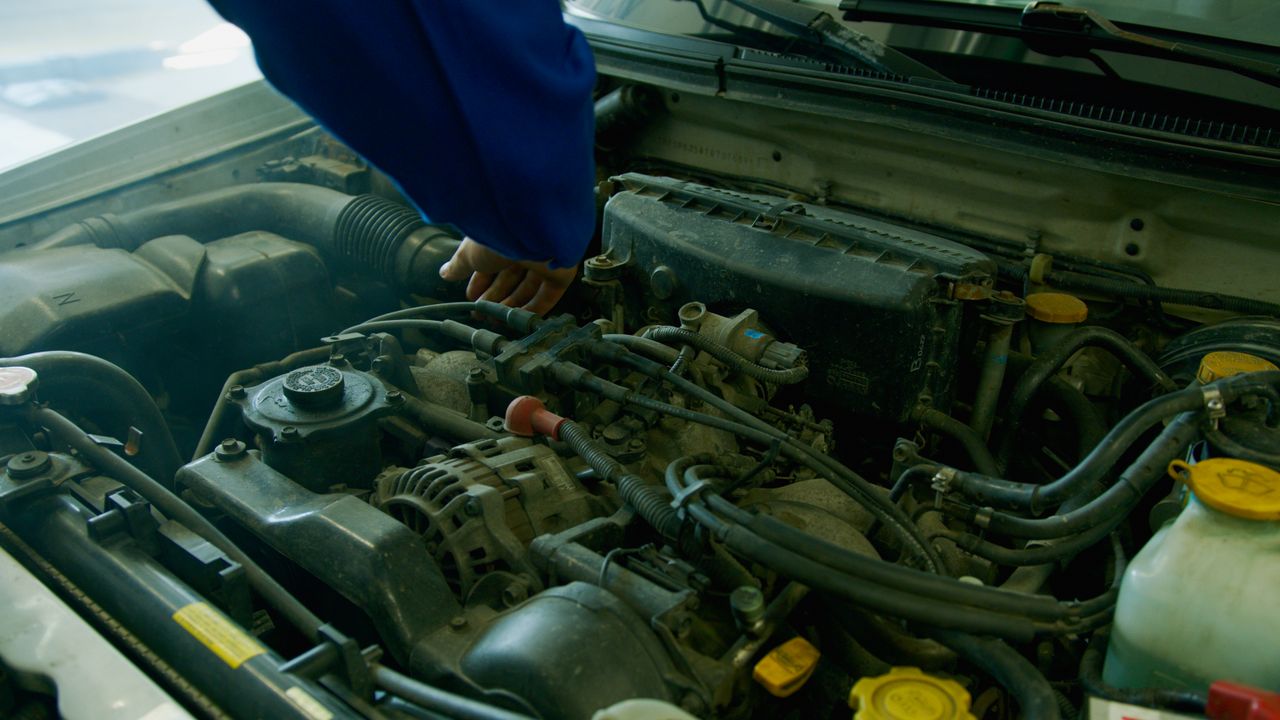
- Oil level and condition — pull the dipstick and wipe it. Oil should be golden to dark brown; grey or frothy oil suggests coolant contamination (head gasket issue)
- Coolant level — should be between MIN and MAX on the reservoir
- Oil filler cap — remove and check the underside. White, mayonnaise-like residue indicates water contamination (head gasket)
- Look for leaks — oil staining, drips, or residue around the engine bay
- Battery terminals — look for white or blue corrosion; terminals should be clean
- Drive belts — look for cracking, fraying, or glazing (shiny surface)
- Coolant hoses — should be firm but slightly flexible; hard and brittle hoses may be due for replacement
- Check the bodywork around the strut towers — rust here is a serious structural flag
Interior
- All electric windows — up and down, all four
- Central locking — test with the key fob
- Air conditioning — should blow cold within 30–60 seconds
- Heater — all fan speeds and heat settings
- All lights — headlights, full beam, indicators (all four corners), hazards, fog lights, reversing lights
- Dashboard warning lights — start the engine and confirm no warning lights remain on after 30 seconds
- Instrument cluster — speedo, fuel, temperature all responding
- Infotainment/radio — Bluetooth, display functioning
- All seatbelts — retract cleanly and click in properly; check the rear belts too
- Seats — slide and recline mechanisms; look for unusual wear
- Carpets and under the mats — lift the mats and check for dampness, which indicates water ingress
- Boot — lift the boot floor and check for dampness or rust around the spare wheel well
The Test Drive
Always insist on a test drive of at least 15 minutes. Don't accept a refusal — a seller who won't let you drive it is a major red flag.
Before moving:
- Confirm the oil and temperature gauges behave normally as the engine warms
- Listen for any unusual sounds at idle
During the drive:
- Straight-line tracking — does the car pull to one side on a level road?
- Braking — does the car pull to one side under braking? Any vibration through the pedal?
- Clutch (manual) — does it bite at a normal height, or very high (worn clutch)?
- Gearchange (manual) — smooth through all gears with no crunch or resistance
- Gearbox (automatic) — smooth changes; no harsh jolts or hunting between gears
- Steering — any play, vibration, or noise when turning?
- Acceleration — any hesitation, misfires, or unusual behaviour?
- Engine sounds — any knocking (especially on acceleration), rattling, or squealing
On a hill (the IoW has plenty):
- Handbrake holds the car stationary on an incline
- Hill start — clutch engages smoothly
- Brakes on the way down — firm and progressive
Documents
- V5C logbook — registered keeper should match the seller; VIN and plate should match the car
- MOT certificate — check expiry date; read any advisories listed
- Service history — stamps, receipts, or dealer records showing consistent maintenance
- Spare keys — one at minimum; two is ideal
After the Inspection
If you're happy with what you've found, agree a price and payment method (bank transfer is safest). Read our scam avoidance guide before completing any private sale.
Frequently Asked Questions
What are the most important things to check when buying a used car? Ranked by consequence: (1) HPI check — confirms no outstanding finance, not stolen, not written off. (2) MOT history at gov.uk — reveals recurring failures, current advisories, and mileage consistency. (3) Engine oil condition — grey or frothy oil on the dipstick indicates coolant contamination, a head gasket warning. (4) Panel gaps — uneven gaps across doors, bonnet, and boot indicate previous accident repair. (5) Test drive — any pulling under braking, a clutch that bites very high, or knocking under acceleration are significant red flags. The paper checks protect you from hidden history; the physical inspection protects you from hidden condition.
What should I specifically check for rust on an Isle of Wight car? Coastal salt air accelerates corrosion significantly. Focus on: all four wheel arches (look for bubbling paint or visible rust at the arch lips); sills (the structural panels below the doors — press gently, a soft or hollow area is a serious rust flag); around the boot lid and the bottom of all four doors; and, if you can safely look underneath, the chassis rails and floor pans. Surface rust on visible panels is cosmetic and manageable. Structural rust on sills, chassis rails, or floor pans is a safety concern and potential MOT failure — walk away unless the price reflects major repair work.
What does grey or frothy oil mean on a used car? Both indicate water contamination — typically a failing or failed head gasket. Grey oil means coolant is mixing with the engine oil. Frothy or mayonnaise-like residue under the oil filler cap confirms the same issue. Head gasket failure is expensive to repair (often £500–£1,500+) and can lead to engine damage if driven. Always check both the dipstick and the underside of the oil filler cap at any used car viewing. A seller who seems evasive about recent overheating episodes or coolant top-ups is a warning sign.
Should I always insist on a test drive before buying? Yes — always. A seller who refuses a test drive is a major red flag; there is almost always a reason they don't want you driving it. The test drive should be at least 15 minutes and should include: normal acceleration and braking; a gentle hill start to check the clutch; varied speeds to listen for any engine, transmission, or suspension noise; and a section with corners to feel the steering. The IoW has plenty of hills — use them. A car that seems fine on a flat car park may reveal clutch, brake, or suspension issues the moment it encounters a gradient.
What documents should I receive when buying a used car privately? At minimum: the V5C logbook (check the registered keeper matches the seller and that the VIN plate on the car matches the V5C); a current MOT certificate (check the expiry date and read any listed advisories); and any service history (stamps, receipts, or dealer records). Spare keys — one key minimum, two is preferable. If there's no service history, factor in the cost of an upcoming service. If the V5C is missing or the seller claims they've "already sent it off," be cautious — the V5C is your primary ownership document and its absence is a significant risk flag.
Related: Used car inspection checklist · HPI checks explained · Avoid scams guide