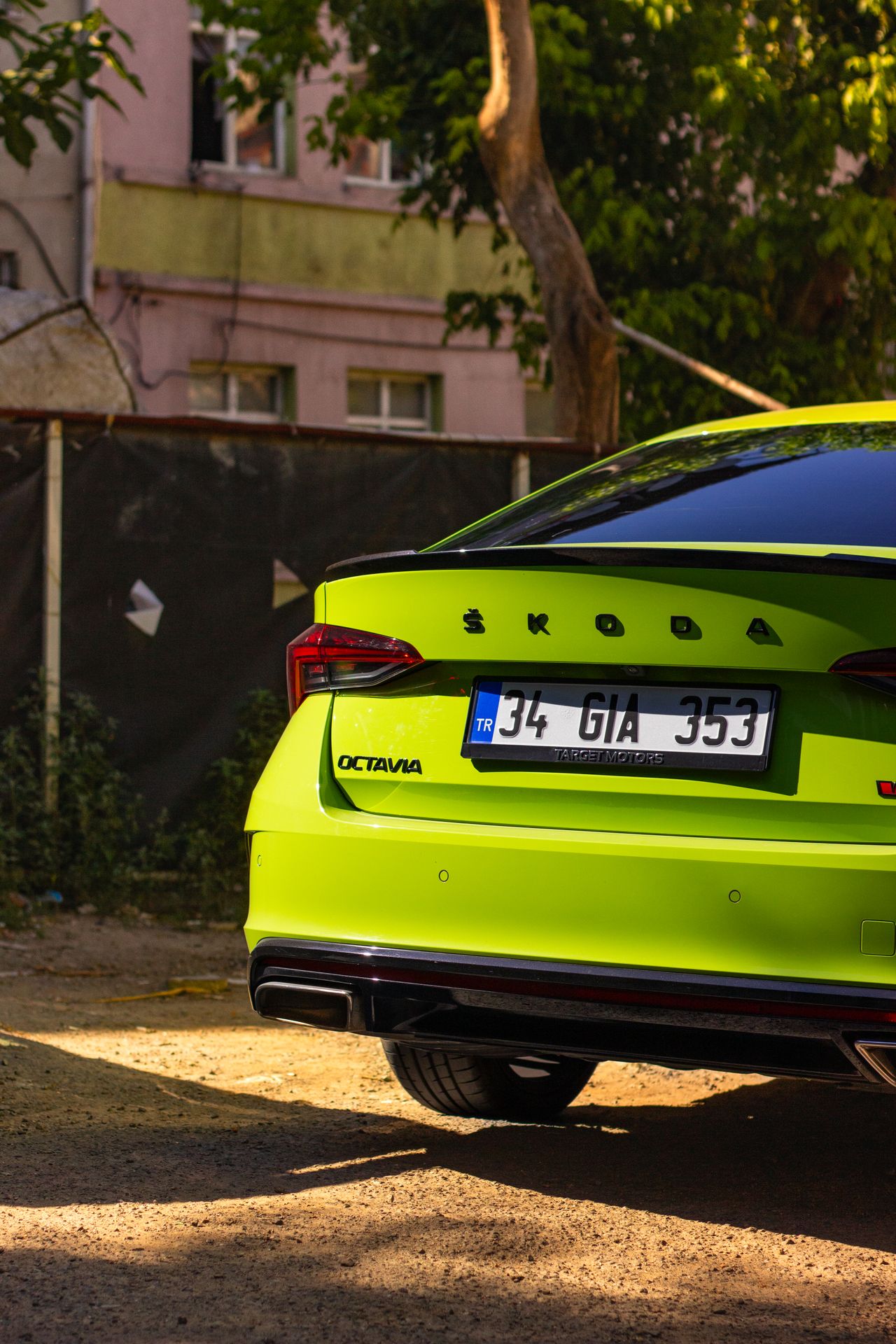
The Skoda Octavia is one of the most sensible used car purchases you can make. Built on the same Volkswagen Group platform as the Golf, it offers similar engineering quality at a lower price — and with a significantly larger boot. It's the car practical-minded buyers choose when they want space, reliability, and running economy without paying for a badge. On the Isle of Wight, where a car earns its keep through everyday utility rather than status, the Octavia makes excellent sense.
Browse Skoda Octavia listings on WightWheels →
Estate or Hatchback?
The Octavia is available as a hatchback and estate (Combi). The estate is exceptional: a 610-litre boot that beats most SUVs, full-size rear seats, and no ride height penalty. For IoW buyers who use their car for everything from the weekly shop to camping trips, the estate is worth prioritising.
Which Generation?
Mk2 (2004–2013): The generation that established the Octavia's reputation for reliability and value. The 1.6 petrol and 2.0 TDI diesel are the engines to focus on. The TDI is excellent for higher-mileage buyers but can develop DPF issues if used mainly for short IoW journeys. Cheaply available now.
Mk3 (2013–2020): A major improvement in refinement and technology. The 1.0 TSI, 1.5 TSI, and 2.0 TDI cover the main buyer needs. The 1.5 TSI petrol is the strongest all-rounder: efficient, punchy, and suits IoW distances well. DSG (dual-clutch) gearbox is excellent in this generation.
Mk4 (2020–present): The current car — now also available as a mild hybrid and plug-in hybrid (iV). Better infotainment, improved safety, and the same fundamentals. PHEV version is well-suited to IoW use.
Petrol vs Diesel for the IoW?
The diesel debate matters particularly for IoW buyers. If your daily mileage is under 15–20 miles and you don't make regular longer runs, a petrol is almost certainly the better choice. DPF regeneration on island roads is a real issue for light-use diesel Octavias — ask specifically about DPF condition and any recent warning lights on diesel examples.
The 1.5 TSI petrol (Mk3/4) is the engine to choose for most IoW buyers: economical enough for everyday use, powerful enough for the occasional motorway run when you bring the car to the mainland.
What to Check
DSG gearbox service history: The dual-clutch automatic needs a fluid change every 40,000 miles or so. Skipped services cause jerky low-speed behaviour and eventual failure. Ask for proof of DSG service on any automatic example.
Mk3 1.4 TSI timing chain: The 1.4 TSI unit in Mk3 2013–2016 had some timing chain tensioner issues. Not universal, but worth asking an independent specialist to check on higher-mileage examples.
Diesel particulate filter (diesel models): If buying a diesel, check for DPF warnings. A car that's mainly done local IoW journeys may have a partially blocked filter.
Rust: Check sills and rear wheel arches on Mk2 cars, particularly on island-owned examples with exposure to salt air.
Budget Guide
| Budget | What to Expect |
|---|---|
| Under £3,000 | Mk2, 2009–2013, 1.6 petrol or 2.0 TDI |
| £3,000–£7,000 | Mk3, 2014–2017, 1.4 TSI or 2.0 TDI |
| £7,000–£12,000 | Mk3 late, 1.5 TSI (2017–2020) |
| £12,000–£20,000 | Mk4, 2020+, 1.5 TSI or iV PHEV |
Frequently Asked Questions
What is the best Skoda Octavia for the Isle of Wight? The Mk3 Octavia (2013–2020) with the 1.5 TSI petrol engine is the best all-round choice for IoW buyers. The 1.5 TSI is punchy, efficient, and well-suited to the island's driving conditions without DPF concerns. In estate (Combi) form, the Mk3 offers a 610-litre boot that beats most SUVs. A 2017–2019 example with the 1.5 TSI and documented service history represents outstanding value.
Skoda Octavia vs VW Golf — which is better for the IoW? The Octavia wins on value and practicality; the Golf wins on prestige and resale. Both use the same VW Group platform and share many mechanical components — but the Octavia is consistently £2,000–£4,000 cheaper for an equivalent year and mileage. The Octavia also has a significantly larger boot (Combi estate: 610L vs Golf estate: 605L). For IoW buyers who prioritise utility over badge, the Octavia is the stronger choice.
Should I buy a petrol or diesel Octavia for island use? Petrol for most IoW buyers. The island's short journeys make DPF regeneration on a diesel Octavia a real concern — the filter needs sustained motorway-speed running to self-clean properly. The 1.5 TSI or 1.0 TSI petrol suits IoW conditions and avoids this risk entirely. Diesel only makes sense if you regularly use the Octavia for mainland motorway trips via the ferry.
What should I check when buying an Octavia on the Isle of Wight? On any automatic, check DSG gearbox service history — the fluid change interval is 40,000 miles and skipped services cause low-speed roughness. On Mk3 1.4 TSI (2013–2016), ask an independent specialist to check the timing chain tensioner on higher-mileage examples. On Mk2 cars, inspect sills and rear wheel arches for salt air corrosion. For diesel models, ask directly about DPF history and any warning lights.
How much does a Skoda Octavia cost on the Isle of Wight? A Mk2 Octavia (2009–2013) petrol or diesel costs under £3,000 in reasonable condition. Mk3 (2014–2017) examples run £3,000–£7,000. A 2017–2020 Mk3 with the 1.5 TSI engine typically costs £7,000–£12,000. The Mk4 (2020+) starts around £12,000 used. The Octavia's pricing consistently undercuts equivalent Golf equivalents by £2,000–£4,000 — making it arguably the best-value family car in its size class.
Browse all family cars for sale on the Isle of Wight →
Related: VW Golf IoW guide · Ford Focus IoW guide · Best family cars IoW