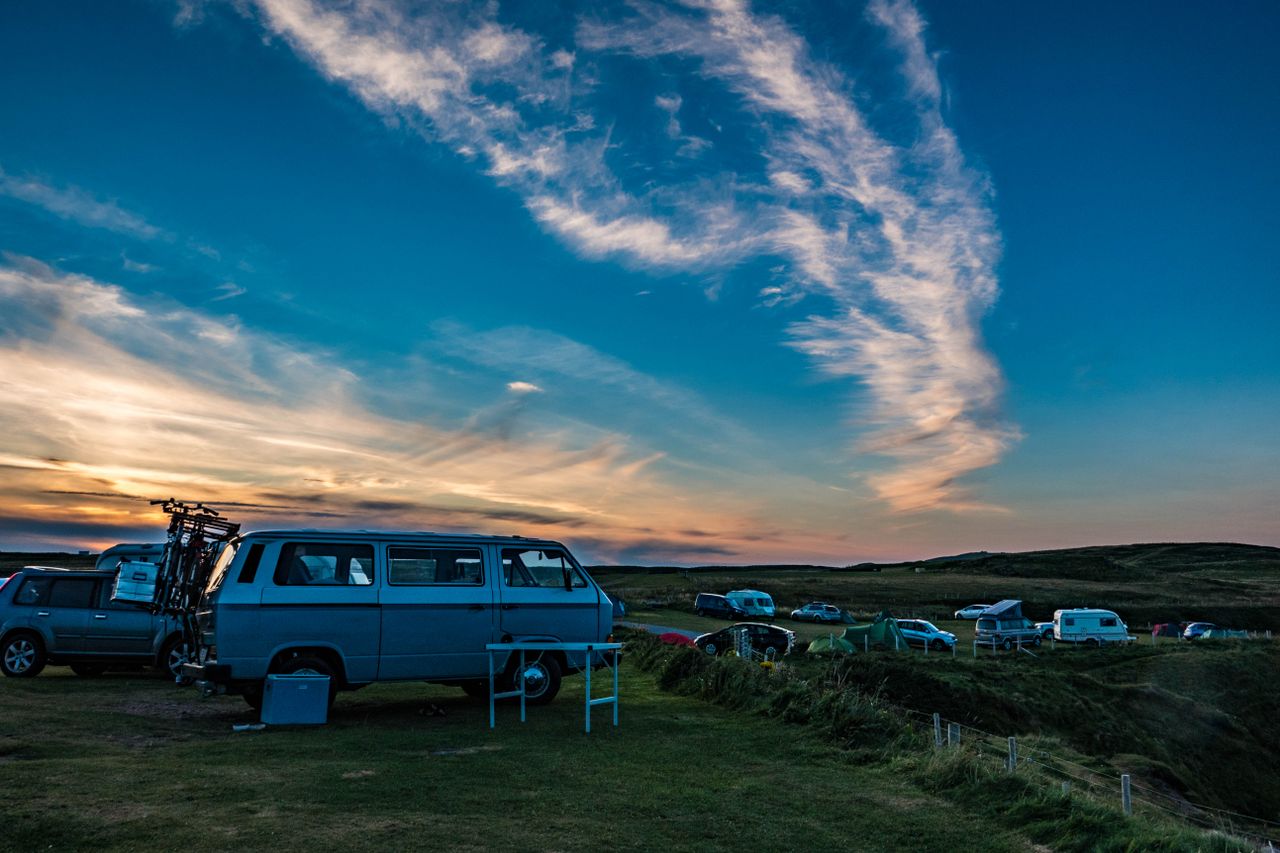
The Isle of Wight is a natural fit for campervan travel. Compact enough to explore fully in a week, with stunning coastal scenery, good campsites, and relatively quiet roads compared to mainland equivalents. Whether you're buying a campervan to use on the island or bringing one over for a holiday, here's what you need to know.
Buying a Campervan on the Isle of Wight
The island's campervan market is smaller than the mainland's, but listings do appear regularly — particularly VW T5 and T6 conversions, Transit-based builds, and older panel van conversions.
What comes up locally:
- VW Transporter (T4, T5, T6) — the classic. High demand, strong prices
- Mercedes Sprinter and Vito conversions
- Ford Transit and Transit Custom conversions
- Older Ford Transit motorhomes (pre-2010)
- Fiat Ducato-based motorhomes
Island campervan considerations:
Salt air: All the corrosion advice from our used car inspection guide applies double to campervans. The base vehicle corrosion is one thing; the conversion body — often custom-built from various materials — may also have moisture issues. Inspect seals around any skylights, roof vents, or rear door frames carefully.
Height restrictions: Check the height of any campervan or motorhome before buying if you plan to use it on Wightlink ferries. Vehicle height restrictions apply on some ferry routes and vessels. Contact Wightlink or Red Funnel with the vehicle's registered height before booking.
Ferry Costs for Campervans and Motorhomes
Campervans and motorhomes are charged differently from standard cars on the ferry — based on vehicle length and sometimes height.
How operators charge:
- Wightlink charges by length: vehicles over a standard length (typically 5m) pay more
- Rates for longer vehicles can be significantly more than a standard car
- Very tall vehicles may not be permitted on some ferries at all
Rough guide to additional cost (2026):
| Vehicle Length | Wightlink Category | Approx. Peak One-Way |
|---|---|---|
| Up to 5m (car-derived camper) | Standard vehicle | £70–88 |
| 5m–6m (large van conversion) | Medium motorhome | £90–130 |
| 6m+ (large motorhome) | Large motorhome | £120–180+ |
Always confirm current prices directly with operators — motorhome ferry pricing is more variable than standard car pricing and changes regularly.
Advance booking for campervans: Book as far ahead as possible. Peak summer ferry slots for large vehicles fill up faster than standard car slots. If you're planning a specific weekend departure, book months ahead.
Height Restrictions — What to Check
Before you book any ferry crossing:
- Measure your vehicle's actual height (roofline, any raised roof, solar panels, roof-mounted AC units add to the height)
- Contact the ferry operator and confirm your vehicle height is within limits for the vessel on the route you want
- Get written or email confirmation if possible
Wightlink Lymington–Yarmouth: Smaller vessels — the height restriction here is tighter than the Portsmouth–Fishbourne route. Check before assuming.
Campsites on the Isle of Wight
The island has an excellent range of campsites — from basic farm paddocks to well-equipped parks. A selection of the most popular:
Whitecliff Bay Holiday Park, Bembridge — Large, well-equipped park on the eastern coast. Stunning coastal views. Book months ahead for peak summer.
Compton Farm Campsite, Brook — Small, quiet farm site near Compton Bay and the SW coastal path. Popular with surfers and walkers. Limited pitches.
Sandown Bay Holiday Centre — Large caravan and camping park near Sandown. Good facilities, near the beach.
Beaper Farm, Ryde — Working farm campsite near Ryde. Rural, peaceful, dogs welcome.
The Orchards Holiday Park, Newbridge — Rural setting, well-equipped, good facilities for families.
Heathfield Farm Camping, Freshwater — Quiet, family farm in the west of the island. Popular for walkers doing the Tennyson Trail.
Book early. Peak summer (July–August) sees most IoW campsites fully booked weeks or months in advance. Bank holiday weekends book up fastest.
Wild Camping on the Isle of Wight
Wild camping — sleeping overnight in a motorhome or tent on non-designated land without landowner permission — is technically illegal in England, and the Isle of Wight is no exception. IoW Council and landowners do enforce this; random roadside overnight stops in campervans are discouraged.
Exceptions:
- Wildcamping with explicit landowner permission is fine
- The Camping and Caravanning Club and Caravan and Motorhome Club both have certified locations (CLs) on the island — small sites on private land, typically 5 pitches maximum
VW Camping Community on the Island
The island has an active VW enthusiast and camper community. Social events, van meets, and informal runs happen throughout the year, particularly in summer. Joining the community (through Facebook groups or local clubs) often opens doors to private van sales, reliable local mechanics who specialise in VW conversions, and campsite recommendations.
Frequently Asked Questions
Is the Isle of Wight a good place for campervanning? Yes — one of the most rewarding in the south of England. The island is compact enough to explore fully in a week from a base at one campsite. The Military Road along the south-west coast, Compton Bay, the Tennyson Trail, and the coastal path around the east of the island are all accessible from good campsites. Roads are relatively quiet outside of peak summer. The island's scale means you're never far from the sea, the downs, or a village pub. The main limitation is space — popular sites fill fast in July and August, and the ferry cost for large vehicles is significant.
How much does it cost to take a campervan on the Isle of Wight ferry? It depends on vehicle length and the operator. Wightlink charges by vehicle length: standard-length campervans (up to 5m) pay broadly similar to a large car — around £70–£88 one way in peak. Larger van conversions or motorhomes (5–6m) pay £90–£130 one way. Full-size motorhomes over 6m cost £120–£180+ one way. The Yarmouth to Lymington route (shorter crossing) operates smaller vessels with tighter height restrictions — confirm your vehicle height before booking. Always book as far in advance as possible for summer dates; peak-season slots for large vehicles are limited and sell out.
What should I check when buying a campervan on the Isle of Wight? Two layers of checks apply — the base vehicle and the conversion. On the base vehicle: all standard used van checks apply, with extra attention to underbody corrosion on IoW examples exposed to coastal salt air (chassis rails, floor pans, rear cross-member). On the conversion: inspect all seals around skylights, roof vents, and rear door frames for moisture ingress — damp in a conversion is expensive to repair. Check the interior for any signs of water damage, mould, or soft patches. Confirm the vehicle's registered height before buying if you plan to use the Wightlink Yarmouth ferry. If buying a VW T5/T6 conversion, check for the typical Transporter issues — DSG judder, injector wear on early TDI, and sill rust.
Do I need to book campsites far in advance on the Isle of Wight? Yes — for peak summer, absolutely. July and August at the most popular sites (Whitecliff Bay, Compton Farm, Heathfield Farm) fill up weeks or months in advance. Bank holiday weekends book out even faster. Shoulder season (May, June, September) is more forgiving, though Compton Farm and the smaller farm sites have limited pitches and still book quickly. For a spontaneous summer weekend, the best strategy is to check CL sites (small certified locations on private land, maximum 5 pitches) — these are less well-known and sometimes available when larger parks are full.
Can I wild camp on the Isle of Wight in a campervan? Technically no. Wild camping — sleeping overnight on non-designated land without landowner permission — is not legal in England, and the Isle of Wight is no exception. IoW Council and landowners do enforce this for roadside overnight stops. The practical alternative is Camping and Motorhome Club or Caravan and Camping Club certified locations (CLs) — small private land sites with typically 5 pitches maximum. These provide a legal, quiet, often beautiful overnight stop without the fees and rules of a full campsite. Several CLs operate on the island; check the club apps for current listings.
Browse campervans on WightWheels →
Related: Vans for sale on the IoW · Ferry cost calculator · Should I bring my car to the IoW?