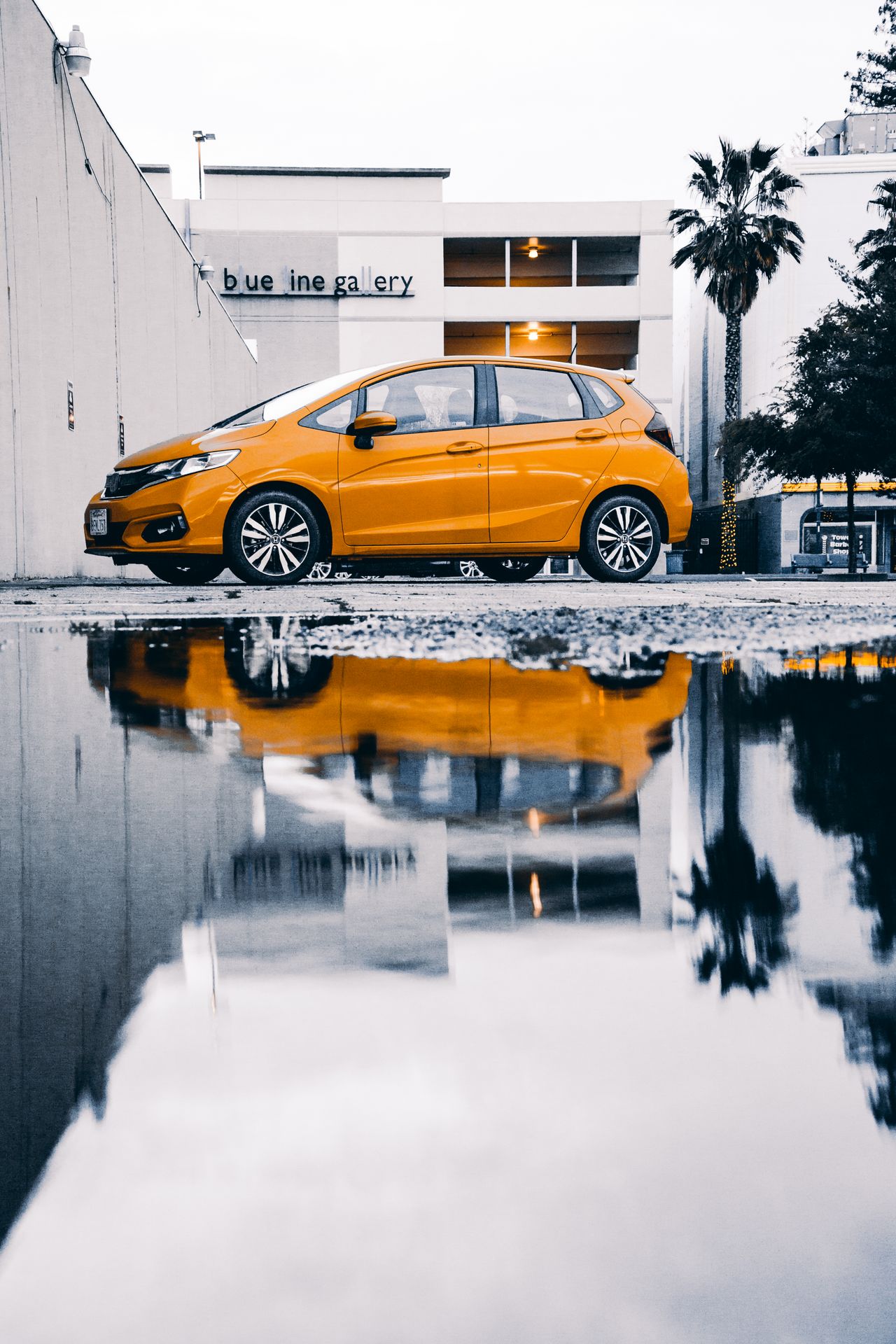
If there were a prize for the most underrated car in the UK market, the Honda Jazz would win it most years. It's never the flashy choice, but it is routinely the right choice: brilliant packaging, near-legendary reliability, and an interior that makes larger cars look wasteful. On the Isle of Wight — where practicality matters more than badge prestige and reliability saves you the mainland-service headache — the Jazz makes perfect sense.
Browse Honda Jazz listings on WightWheels →
What Makes the Jazz Special
Magic Seat system: The rear seats fold multiple ways — seatback forward (for tall items like plants or bikes), seat base folding up (for standing items like bicycles or even a motorbike), or flat for maximum boot space. A boot that fits a potted olive tree is a real-world advantage on an island where the next garden centre is a ferry ride away.
Reliability: The 1.2 and 1.4 i-DSI engines (pre-2008) and the 1.3 i-VTEC (2008–2015) have outstanding records. It's not unusual to find Jazz examples with 100,000+ miles that have never had a significant mechanical issue.
Interior space: The Jazz is larger inside than it looks. Rear legroom is better than many B-segment cars despite a short exterior length. Four adults fit without compromise.
Which Generation?
Mk1 (2002–2008): The original. 1.2 or 1.4 engine, very basic but extremely tough. Now available cheaply with big miles. Fine for a budget daily driver if the body is solid.
Mk2 (2008–2015): The refined version. 1.2 or 1.3 i-VTEC. Much improved interior, better comfort, and the same rock-solid reliability. The sweet spot for most buyers. Available in Sport (alloys, more kit) and SE/EX spec. Worth seeking out examples with service history.
Mk3 (2015–2020): Greater safety equipment, improved infotainment, and the option of a 1.3 CVT automatic. The automatic suits IoW town driving very well — smooth, stress-free, and economical.
Mk4 (2020–present): Full hybrid (no plug-in required — charges itself). Excellent fuel economy on island driving. The most sophisticated Jazz yet and genuinely competitive with much more expensive cars.
Hybrid or Petrol?
The Mk4 hybrid is excellent for IoW use for exactly the same reasons as the Toyota Yaris hybrid: short journeys, 30mph zones, urban traffic. Real-world fuel economy of 55–65mpg on island roads is achievable.
Older petrols (Mk2/3) remain very capable: 45–50mpg on typical IoW routes.
What to Check
Rust (Mk1, early Mk2): Check sill ends, rear wheel arches, and around the tailgate on older examples. Earlier Jazz models can rust here.
CVT gearbox (Mk3 automatic): Honda's CVT is reliable but listen for any belt slipping sounds or unusual noise under acceleration. Generally fine if serviced.
A/C compressor: A relatively common fault on older Jazz models. Make sure the air conditioning works properly on a test drive.
Budget Guide
| Budget | What to Expect |
|---|---|
| Under £2,500 | Mk1 or early Mk2, high mileage |
| £2,500–£5,000 | Mk2, 2010–2014, 50,000–90,000 miles |
| £5,000–£9,000 | Mk3, 2015–2019, mid mileage |
| £9,000–£14,000 | Mk4 hybrid, 2020+, lower mileage |
Frequently Asked Questions
Why is the Honda Jazz particularly good for the Isle of Wight? Three reasons. First, the Magic Seat system folds multiple ways — useful for the kind of practical island errands (garden centre, DIY, beach gear) that a short trip justifies making. Second, the 1.3 i-VTEC petrol engine has virtually no known failure modes when maintained — on an island where a specialist trip costs ferry money, this matters. Third, the Jazz's lower annual mileage on the island suits its petrol engines perfectly.
Which Honda Jazz generation is best? The Mk4 hybrid (2020+) is the most capable and is a genuinely excellent IoW car — 55–65mpg on island routes with no plug-in required. For buyers on a more limited budget, the Mk2 (2008–2015) with the 1.3 i-VTEC is the best value: refined, reliable, spacious for its size, and available well under £5,000 in good condition. The Mk3 (2015–2020) with the CVT automatic is excellent for town driving.
Is the Mk4 Jazz hybrid worth the extra cost? Yes for most IoW buyers. The self-charging hybrid means you never need to plug in — the battery charges through regenerative braking, which happens constantly on the island's stop-start roads. Real-world fuel economy of 55–65mpg is achievable. Compared to a Mk3 1.3 petrol (around 45mpg), the saving on 8,000 miles per year is roughly £300–400 annually, plus the hybrid runs quieter in town.
What should I check when buying a Honda Jazz? On Mk1 and early Mk2 models (pre-2010), check sill ends and rear wheel arches for salt air corrosion — Honda's rust prevention improved significantly after 2009. On Mk3 CVT automatics, listen for any unusual noise under acceleration and confirm the gearbox changes smoothly from rest. On all generations, check the air conditioning compressor works — this is the most common failure on older Jazzes.
How much does a Honda Jazz cost on the Isle of Wight? A Mk1 or early Mk2 (2004–2010) can be found under £2,500 in usable condition. A Mk2 (2010–2014) in good order typically costs £2,500–£5,000. The Mk3 (2015–2019) runs £5,000–£9,000. A Mk4 hybrid (2020+) costs £9,000–£14,000 used. Island pricing broadly tracks mainland — the Jazz is popular with older buyers who maintain their cars well.
Browse all cars for sale on the Isle of Wight →
Related: Toyota Yaris IoW guide · Hyundai i10 IoW guide · Honda Civic IoW guide