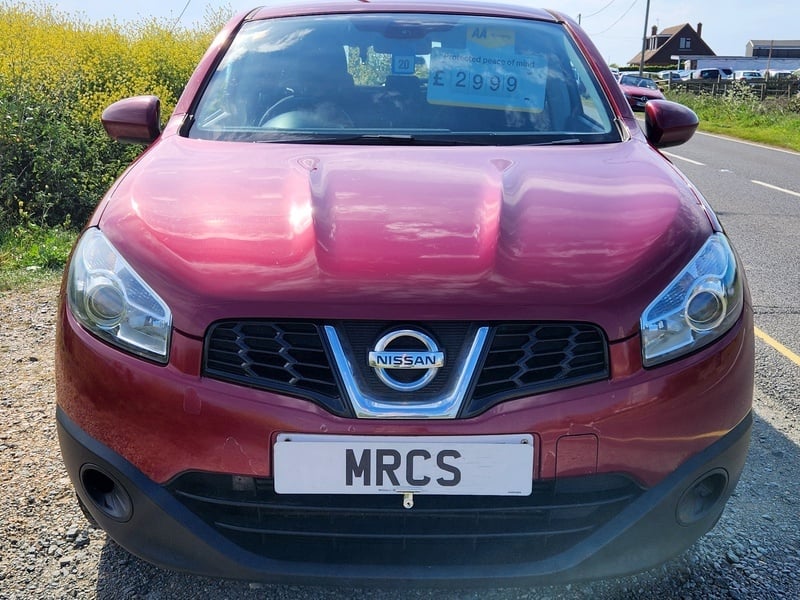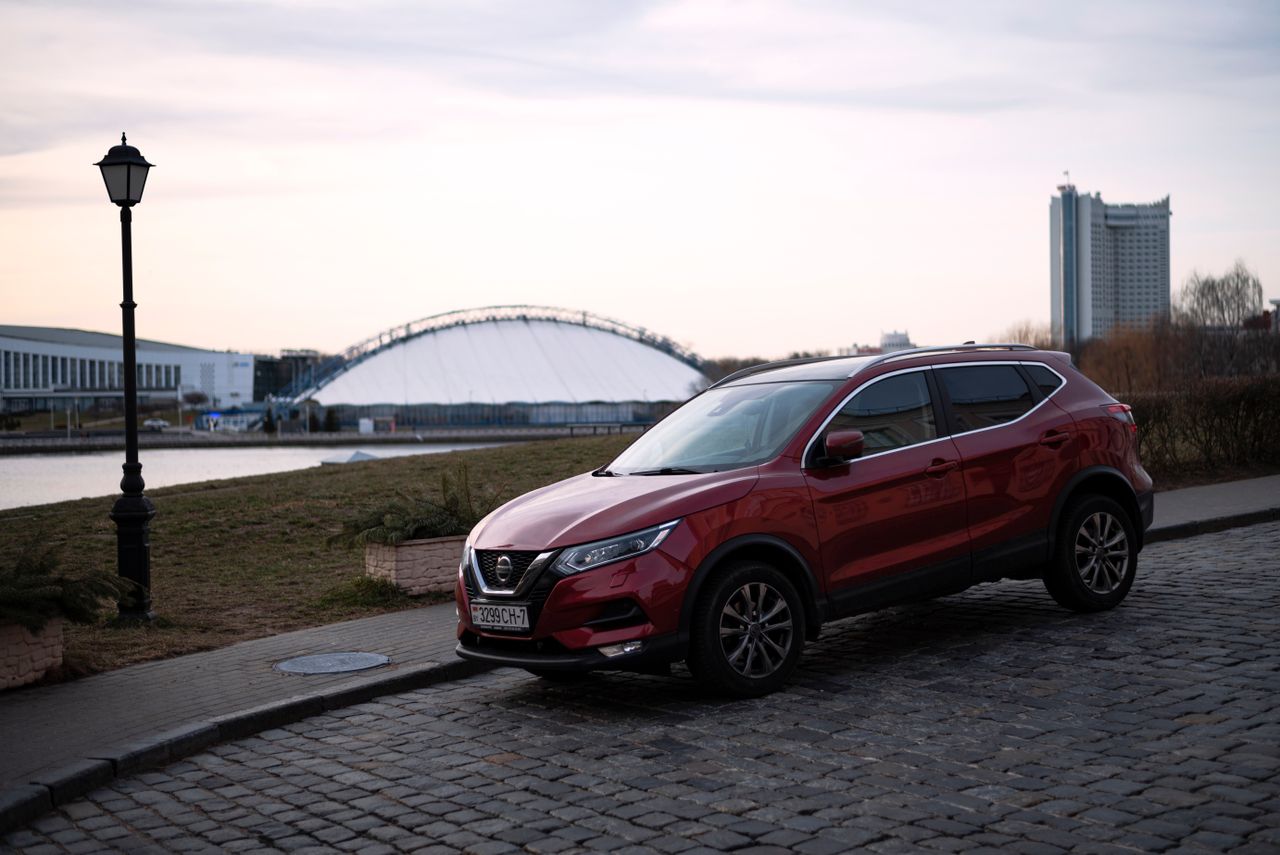
The Nissan Qashqai essentially created the crossover segment in the UK when it launched in 2007. Since then it has been a consistent bestseller — it combines the practicality of a medium family car with a more commanding driving position, better ground clearance, and flexible interior space. On the Isle of Wight, the Qashqai is one of the most commonly seen cars precisely because it suits island life so well: not too big for town use, comfortable on the varied IoW road network, and increasingly available in self-charging hybrid form.
Browse Nissan Qashqai listings on WightWheels →
Which Generation?
Mk1 (2007–2013): The original. Now relatively old but solidly built. The 1.6 petrol and 1.5 dCi diesel were the most common engines. Available cheaply now — a well-maintained example with low mileage (common on the island) can still be a good buy. The diesel is better avoided for IoW conditions; the 1.6 petrol is the one to choose.
Mk2 (2014–2021): A complete redesign on a new platform. More spacious, better refinement, and the introduction of a 1.2 DIG-T turbocharged petrol (less common but capable) and the very popular 1.2 and 1.6 petrols plus 1.5 dCi diesel. The 1.5 dCi diesel is the most common you'll find — but the same DPF warning applies for mainly-local IoW driving. Best choice for IoW: the 1.2 DIG-T or 1.6 petrol.
Mk3 (2021–present): A significant update bringing e-Power technology. The e-Power version is genuinely exciting for IoW buyers: the car runs purely on electric motor (like an EV) but charges its own battery from a small petrol engine — no plugging in required, no DPF, and dramatically better fuel economy in stop-start island driving. Real-world 45–55mpg in IoW conditions. This is the version to seek out if budget allows.
e-Power: Is It Worth It on the IoW?
The Qashqai e-Power is unique technology — the petrol engine acts as a generator only, never directly driving the wheels. The electric motor does all the driving. For IoW use:
- Electric-motor torque delivery is smooth and responsive from zero mph
- No clutch, no gear changes — near-EV driving feel
- Fuel economy is best in exactly the conditions IoW roads present: low speed, frequent stops
- No DPF (petrol powers a generator, not combustion-to-wheels)
- Regenerative braking recovers energy on the frequent island gradients
The only caveat: e-Power is more expensive to buy than a standard petrol Qashqai. Prices are coming down as used examples multiply.
What to Check
1.5 dCi diesel DPF (Mk1/Mk2): This is the most important issue for IoW buyers of a diesel Qashqai. If the car has been used primarily for local island trips, the DPF may be partially blocked. Ask about any DPF warning lights and whether the car has had any active DPF regeneration runs (long motorway trips).
CVT gearbox (some petrol models): The Xtronic CVT automatic transmission is fitted to some models. It's generally reliable but can feel sluggish under hard acceleration. Test thoroughly in town.
Mk1 rust: Check wheel arches on Mk1 examples, particularly on island cars with salt air exposure.
ProPilot system (Mk3): The Mk3's driver-assist system is worth checking that all sensors and cameras are working — damaged sensors can be expensive to replace.
2WD or 4WD?
The Qashqai is predominantly a 2WD car — only certain diesel variants had All-Wheel Drive. For IoW use, 2WD is perfectly adequate for 99% of journeys. The one scenario where 4WD might be useful is accessing muddy tracks or steep gravel driveways in wet conditions.
Budget Guide
| Budget | What to Expect |
|---|---|
| Under £4,000 | Mk1, 2009–2013, 1.6 petrol |
| £4,000–£9,000 | Mk2, 2015–2018, 1.2 DIG-T or 1.6 petrol |
| £9,000–£16,000 | Mk2 late or Mk3 early, 2019–2022 |
| £16,000–£28,000 | Mk3 e-Power, 2022+, lower mileage |
Frequently Asked Questions
What is the best Nissan Qashqai for the Isle of Wight? The Mk3 Qashqai (2021+) with e-Power is the standout choice for IoW buyers who can stretch the budget. Its electric-motor drive system is perfectly matched to island conditions — smooth delivery from zero, outstanding fuel economy in stop-start driving, and no DPF concerns. For buyers on a more modest budget, the Mk2 (2014–2021) with the 1.2 DIG-T or 1.6 petrol is the best value option — avoid the diesel for mainly-local IoW use.
Is the Nissan Qashqai e-Power worth buying for IoW driving? Yes — it's arguably the best non-plug-in powertrain available for island conditions. The e-Power system is unique: a small petrol engine acts as a generator, with an electric motor doing all the driving. This means the efficiency benefits of electric drive (torque from zero, regenerative braking on IoW gradients, no gearbox losses) without needing to plug in. Real-world economy of 45–55mpg is achievable on IoW roads. The main downside is cost — budget £16,000–£28,000 for a used Mk3 e-Power.
Should I buy a diesel Qashqai for island use? Generally no. The Qashqai's 1.5 dCi diesel requires regular motorway or higher-speed running to keep the diesel particulate filter healthy. The island's predominantly short, low-speed journeys are exactly the wrong conditions — a partially blocked DPF can cause power loss, warning lights, and expensive repair bills. If you do regularly commute to the mainland via ferry and drive at speed on mainland roads, a diesel can work, but the petrol alternatives are a safer choice for island-first buyers.
What should I check when buying a Qashqai on the Isle of Wight? For Mk1/Mk2 diesels, ask directly about DPF history and any warning lights. On Mk1 cars, check rear wheel arch rust — particularly on older island examples with salt air exposure. CVT automatic gearboxes fitted to some petrol models should be tested for smooth, responsive operation — rough or sluggish acceleration is a warning sign. On Mk3 e-Power models, check that the ProPilot driver-assist sensors and cameras are all working; repairs can be expensive.
How does the Qashqai compare to the Nissan Juke for IoW use? The Qashqai is larger, more comfortable on longer journeys (including ferry trips), and has significantly more boot space. The Juke is more compact and easier to park in the island's tighter spots, with a sportier character. For most IoW families the Qashqai is the better choice — more practical, more comfortable, and available in the e-Power hybrid that suits island driving particularly well. The Juke is worth considering if you specifically want something smaller or have parking constraints.
Browse all SUVs and crossovers for sale on the Isle of Wight →
Related: Nissan Juke IoW guide · Kia Sportage IoW guide · Toyota RAV4 IoW guide