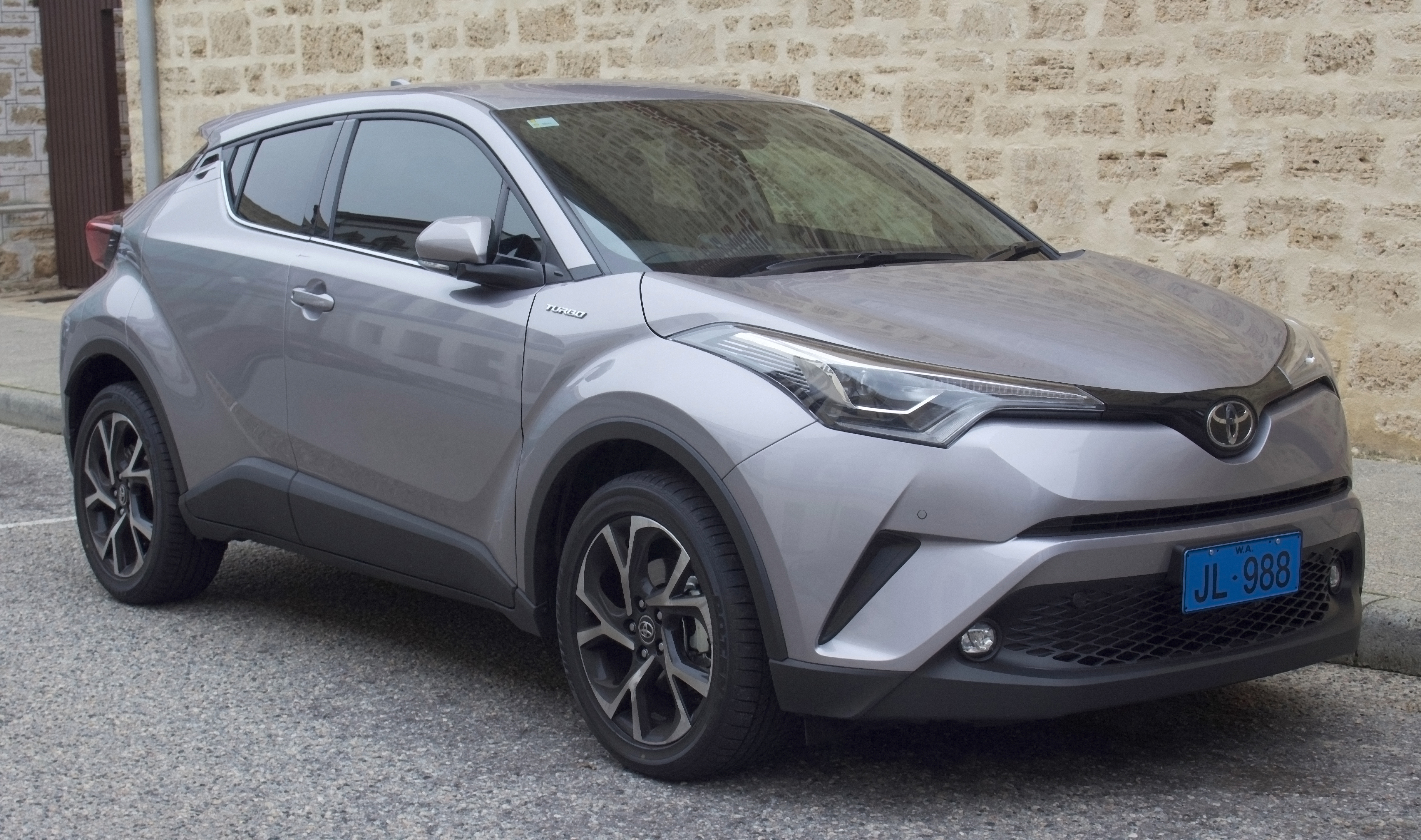
The Toyota C-HR is one of the most distinctive-looking crossovers in the compact SUV class — the angular body lines, hidden rear door handles, and floating roof design are instantly recognisable. More importantly for Isle of Wight buyers, it's a car that has never been sold in the UK with a diesel engine. Every C-HR runs a self-charging hybrid system, which is why it suits island driving better than almost any rival in the class. Short trips, stop-start town driving, and the kind of varied IoW use that makes diesel DPF maintenance problematic: the C-HR handles all of it efficiently and without mechanical penalty.
Which Generation to Buy
First-generation C-HR (2016–2023): The established model and the one with most used availability. Available with two hybrid powertrains: the 1.8-litre hybrid (from 2016) and the 2.0-litre hybrid (from 2019). Available from around £12,000 for early examples.
Second-generation C-HR (2024+): The redesigned model. Larger, more spacious interior, bigger boot, and revised styling. Very limited used availability at the time of writing.
For most buyers, the first generation offers the best balance of value and availability.
Hybrid System: 1.8 vs 2.0
1.8-litre hybrid (122bhp system): The original C-HR powertrain. A petrol engine works in combination with an electric motor, with regenerative braking recharging the small battery. No plug-in charging — it self-charges through driving. The 1.8 hybrid is refined, quiet at low speeds (where the electric motor handles most of the work), and returns around 50–57mpg in mixed IoW driving. The most widely available C-HR on the used market.
2.0-litre hybrid (184bhp system): Available from 2019. The same self-charging hybrid approach but with a more powerful petrol engine and an improved CVT gearbox. More responsive at higher speeds and better-suited to motorway mainland runs. Economy is slightly lower at 47–53mpg. Worth seeking out on later used examples if budget allows.
Both hybrid systems suit island driving well — the electric motor dominates at low-speed town driving, which is where the IoW's mileage is concentrated.
The Diesel Question
The C-HR has never been sold with a diesel engine in the UK. This is a significant advantage for island buyers. There is no DPF to maintain, no cold-start wear accumulation from short trips, and no concern about blocked filters from never reaching operating temperature. The hybrid system sidesteps all of these issues while delivering better economy than a petrol alternative.
For IoW buyers who do mainly local short-trip driving, the C-HR's hybrid is genuinely the better technical choice.
What to Check: Boot Space
The C-HR's most significant practical limitation: the boot is 358 litres — smaller than most class rivals. The Nissan Juke offers 354 litres (similar), the SEAT Arona 400 litres, and the Kia Sportage 503 litres. The C-HR's styling compromises its boot opening — it's narrower than the load area behind it. Large or wide items are harder to load than in rivals. For buyers who regularly carry bulky loads, this is worth knowing before purchase.
Known Issues to Check
Rear visibility: The C-HR's design creates significant C-pillar blind spots. The rear view is genuinely restricted. Most UK-spec C-HRs have a reversing camera (check it works), but the rear quarter vision is limited on the road. Take particular notice during the test drive in island car parks.
Plastic interior quality (entry trims): Early C-HRs on entry Icon trim have harder, more basic interior plastics than rivals. The Excel trim level has a more premium feel. Check which trim level you're viewing.
CVT gearbox feel: The C-HR uses a CVT (continuously variable transmission) — the same type used across Toyota and Lexus hybrids. At moderate acceleration, it can feel slightly disconnected — revs rise before the car accelerates. This is normal behaviour for Toyota's CVT hybrid system. Test drive with realistic acceleration to confirm you're comfortable with the sensation.
Hybrid battery: Toyota's hybrid battery (NiMH in the 1.8, lithium in the 2.0) is extremely durable and covered by Toyota's 8-year/100,000-mile warranty on the battery itself. Real-world degradation is rare. Ask the seller if the battery warning light has ever appeared.
C-HR vs Nissan Juke: Which Is Right for IoW?
| Toyota C-HR (1st gen) | Nissan Juke (2019) | |
|---|---|---|
| Powertrain | Self-charging hybrid only | 1.0T petrol or mild hybrid |
| Boot space | 358 litres | 422 litres |
| Running economy | 50–57mpg (hybrid) | 38–46mpg |
| Reliability record | Exceptional | Good |
| Rear visibility | Restricted | Better |
| DPF concern | None (no diesel) | Diesel available (DPF) |
| Running costs | Lower (hybrid economy) | Slightly higher |
For island buyers, the C-HR's hybrid economy and Toyota reliability record are strong differentiators. The Juke has more boot space and better rear visibility. If fuel economy and reliability are priorities, the C-HR wins convincingly.
IoW Buying Tips
The C-HR's hybrid system does not require any special charging infrastructure — it charges itself. This makes it simpler than a plug-in hybrid for buyers who don't have home charging. The self-charging system works most efficiently in exactly the kind of mixed town-and-country driving the island provides.
The C-HR is 4.36m long — compact enough for island lanes and car parks without difficulty. The elevated driving position helps on hedge-lined roads.
Toyota's service network is well-established, but the C-HR does not need specialist hybrid technicians for routine work — most independent garages handle basic servicing. For hybrid-specific issues, use a Toyota dealer or a garage with hybrid experience.
Check MOT history at gov.uk/check-mot-history and run an HPI check.
Budget Guide
| Budget | What to Expect |
|---|---|
| Under £13,000 | 1st gen 2016–2018, 1.8 hybrid, 50,000–90,000 miles |
| £13,000–£18,000 | 1st gen 2018–2020, 1.8 hybrid, 30,000–60,000 miles |
| £18,000–£23,000 | 1st gen 2019–2021, 2.0 hybrid or 1.8 Excel, lower mileage |
| £23,000+ | 1st gen facelift 2020–2023, 2.0 hybrid, low mileage |
Frequently Asked Questions
Is the Toyota C-HR reliable?
Yes — among the most reliable cars in the compact SUV class. Toyota's hybrid system has an exceptional long-term track record across the Yaris, Corolla, and C-HR. The 1.8 NiMH hybrid battery is extremely durable; the 2.0-litre lithium system is more recent but shows similarly low failure rates. The absence of a diesel or conventional turbocharged petrol reduces the risk of common failure points in rival cars. With regular servicing, a C-HR with 100,000+ miles is not unusual without significant intervention.
Does the Toyota C-HR need to be plugged in?
No — the C-HR is a self-charging hybrid, not a plug-in. The battery charges through the petrol engine and regenerative braking (energy recovered when decelerating). There is no external charging port and no need for a home charger. This is a genuine advantage on the IoW for buyers who don't have off-road parking for a charge cable, or who want hybrid economy without the infrastructure of a PHEV.
Is the Toyota C-HR good for the Isle of Wight?
Very good — arguably one of the best-suited crossovers to island driving. The hybrid system excels in stop-start town driving, which is where most island journeys happen. The electric motor handles low-speed driving almost silently. There is no diesel DPF to worry about. The compact dimensions (4.36m) suit island lanes and car parks. The fuel economy of 50–57mpg in mixed island driving is better than any diesel alternative in the class.
What is the boot size of the Toyota C-HR?
358 litres — smaller than most class rivals. The Nissan Qashqai offers 479 litres, the Kia Sportage 503 litres. The C-HR's styling creates a narrower boot opening than the load area behind it, which can make loading bulky items awkward. For buyers who regularly carry large items or have significant storage requirements, this limitation matters. For typical day-to-day use (shopping, light luggage, child seats) it's adequate.
Should I buy a 1.8 or 2.0 hybrid Toyota C-HR?
For most island buyers, the 1.8 hybrid is the practical choice — wider availability, lower purchase price, and excellent real-world economy on island roads. The 2.0 hybrid is worth seeking out if budget allows, as it offers noticeably better performance at higher speeds and a more refined CVT gearbox. The 2.0 is also better suited to regular mainland runs via the ferry, where the additional power is more noticeable at road speed.
Browse Toyota C-HRs for sale on the Isle of Wight →
Related: Toyota RAV4 guide · Kia Niro guide · Electric cars for sale IoW